CHROMAskin is a 2025-2026 UCI BioENGINE Senior Capstone Project in collaboration with the team at DermaVision Technologies and University of California, Irvine Biomedical Engineering Department.
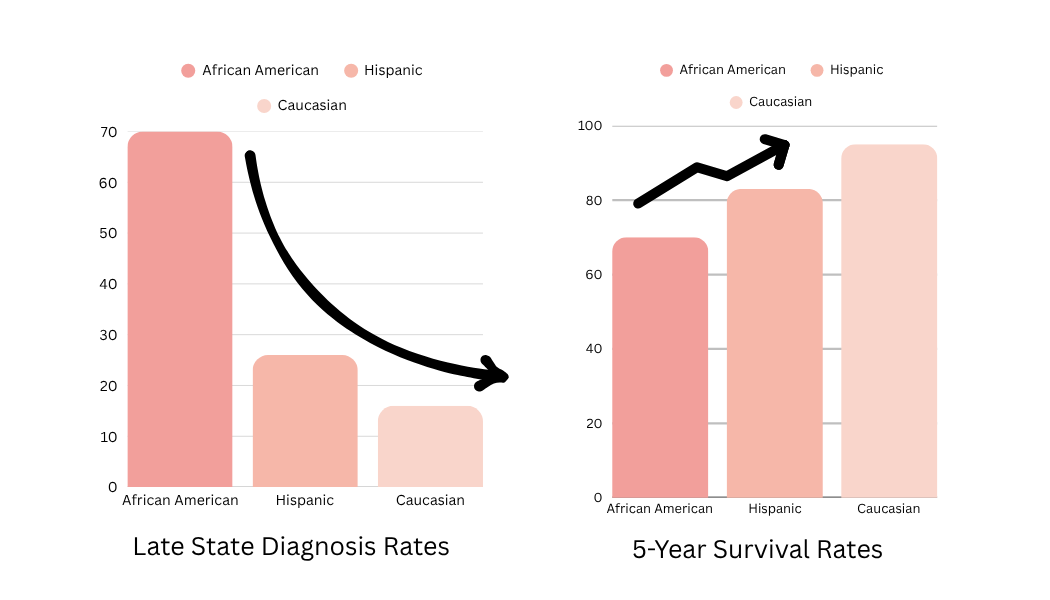
1 in 5 Americans will be diagnosed with skin cancer by age 70. This looks like over 9,500 new cases a day. As for the 5-year survival and late stage diagnostic rates for skin cancer, these fluctuate greatly between different ethnic groups with African Americans being particularly marginalized.
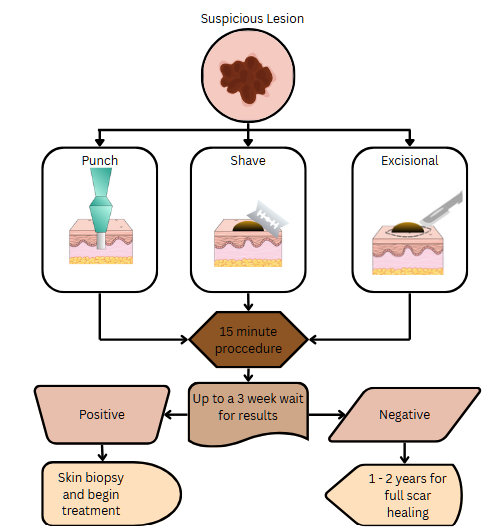
Initial skin cancer screening involves using a dermascopy tool, the primary non-invasive method,which is subjective and leads to less accurate diagnostics. This issue is further amplified for patients with darker skin tones. Even experienced physicians can spend over 15 minutes on skin checks when patients have multiple lesions of concern. After this process patients still have to undergo skin biopsies on suspicious lesions.
CHROMAskin is a portable, noninvasive device that healthcare providers can use in clinics and hospitals. By imaging and analyzing lesions using AI, our device eliminates the subjectivity of diagnosing skin cancer to help make decisions at the point of care.
Our device images near-infrared wavelengths that standard cameras can’t, capturing extra details to analyze.
A machine learning model trained on a diverse set of training images analyzes skin lesions to classify them.
For security, the algorithm includes three classification tiers: whether or not the lesion is cancer, what type of cancer it is, and a final confirmation.
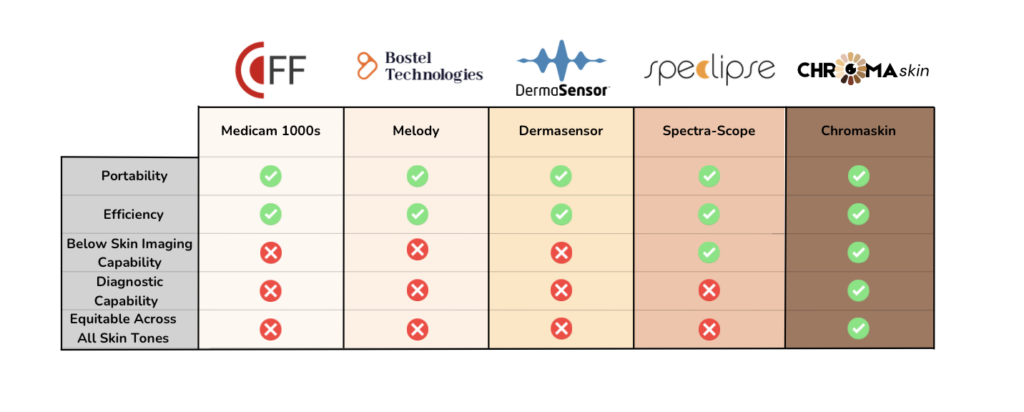
Current skin cancer diagnostic tools are becoming faster and more portable, but many still fall short when it comes to equitability. Most rely on surface-level imaging or limited training datasets, which can make diagnosis less accurate for patients with darker skin tones.
Chromaskin is designed to close this equity gap by combining multispectral imaging with AI trained on diverse skin tone data. This allows physicians to quickly and noninvasively evaluate lesions while supporting more fair, consistent, and equitable skin cancer detection for all patients.
The demand for faster and more accessible skin cancer diagnostics continues to grow as skin cancer cases increase worldwide. Current workflows rely heavily on visual assessment and biopsies, creating delays, variability, and healthcare access challenges. CHROMAskin aims to support earlier and more objective lesion evaluation through portable multispectral imaging technology.
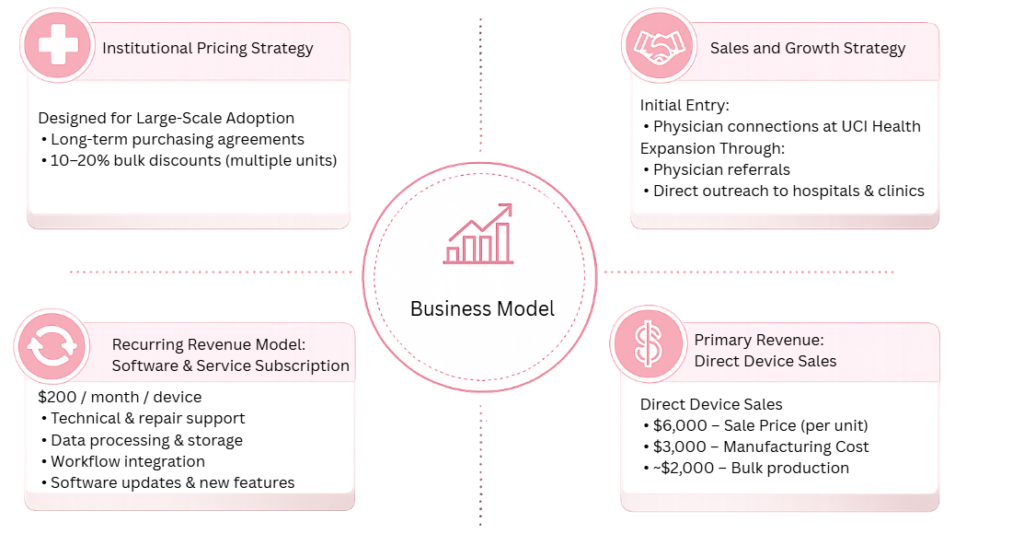
CHROMAskin’s market strategy focuses on scalable clinical adoption through dermatology clinics, academic medical centers, and healthcare systems. Long-term expansion aims to improve access to skin cancer screening across broader outpatient and primary care environments.

Improve lesion evaluation and workflow efficiency.

Support early screening and referral decisions.

Expand access where dermatologists are limited
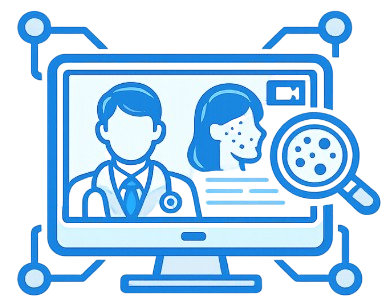
Enable standardized imaging and remote consultation.
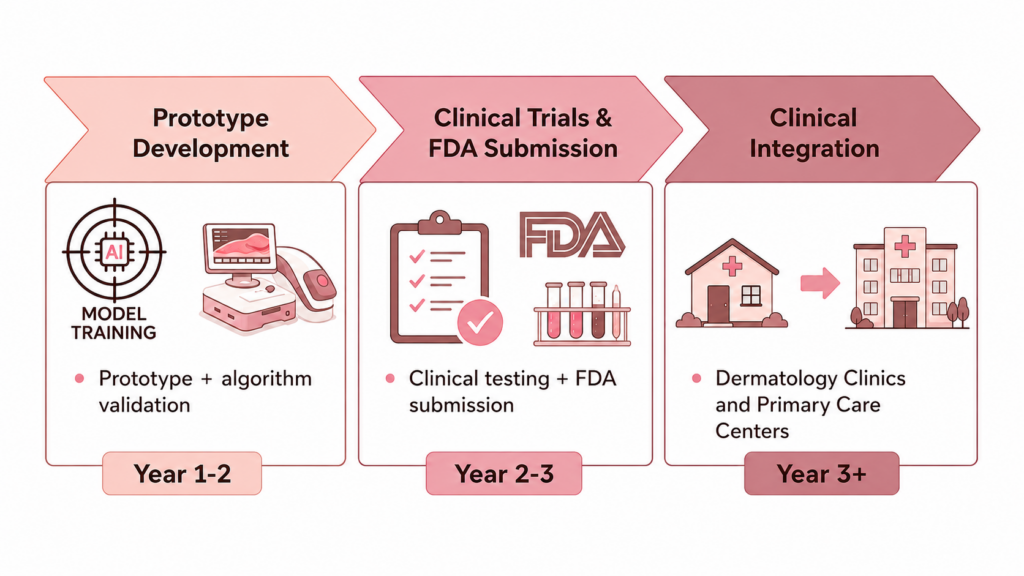
Our clinical adoption strategy progresses from prototype validation and clinical testing to long-term integration within dermatology clinics and primary care centers. This phased approach supports scalable deployment, broader screening accessibility, and workflow-friendly implementation in real-world healthcare environments.

Team Lead
Biomedical Engineering students at the University of California, Irvine

Testing Lead
Biomedical Engineering students at the University of California, Irvine

Business Lead
Biomedical Engineering students at the University of California, Irvine

Innovation Lead
Biomedical Engineering students at the University of California, Irvine

Manufacturing Lead
Biomedical Engineering students at the University of California, Irvine
Matthew Lo
CEO, R&D Engineer, Algorithm Project Manager
Gerald Lee
Operations Project Manager
Jessica Lam
R&D Engineer, Hardware Project Manager
Alejandra Reyes
Clinical Project Manager
Connect with DermaVision